

Valuing the Priceless: How Acreage, Views, and Custom Builds Affect Your Home’s Worth
You’re standing on your deck, coffee in hand, looking out over a serene lake or a sprawling, private backyard. You think to yourself, “You can’t put a price on this.” But when it comes time to sell, you have to. How do you possibly translate these unique, seemingly “priceless” features into a tangible dollar amount that reflects their true value?
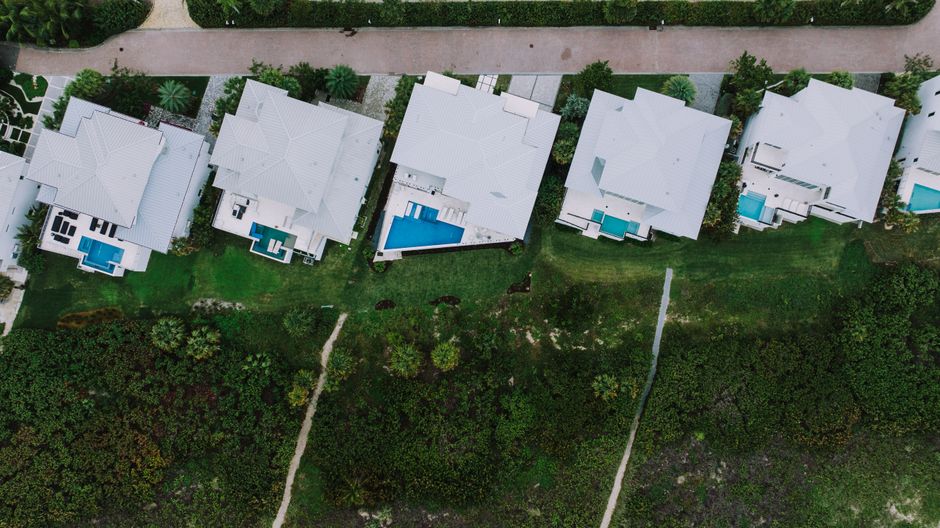
This is a common challenge for owners of distinctive properties. Standard online valuation tools and basic market analyses often fall short, failing to capture the immense value of a home with significant acreage, breathtaking views, or high-end custom features. These automated systems rely on simple comparisons to nearby homes, but for a one-of-a-kind property, those direct comparisons simply don’t exist.
At realestateinkeswick.com, we are local market experts who specialize in understanding the nuances that make a property special. We believe that valuing a home is both a science and an art, especially when dealing with features that go beyond simple square footage and bedroom counts. This guide will help you understand how these priceless assets are professionally evaluated and how they impact your home’s ultimate worth.
Key Takeaways
- Acreage Value is Nuanced: The value of land depends more on its usability, location, and development potential than on its raw size alone.
- Views Have a Price Tag: A desirable and protected view can add a significant premium to your home’s value, often ranging from 5% to over 50% for exceptional water views.
- Custom Builds Can Be a Double-Edged Sword: High-quality, broadly appealing custom features can increase value, but overly personal or “over-improved” elements may not provide a return on investment.
- Expert Valuation is Crucial: Automated online estimators cannot accurately assess unique properties. A knowledgeable local real estate professional is essential for an accurate valuation.
TL;DR
Standard home valuation methods often undervalue unique features like extensive acreage, premium views, and custom construction. The true worth of these “priceless” assets is determined by factors like land usability, view quality and permanence, and the market appeal of custom finishes. To get an accurate valuation for a unique property, you need the nuanced analysis of a local real estate expert who understands the specific market demand for these features.
The Challenge of Standard Valuations for Unique Homes
A standard Comparative Market Analysis (CMA) struggles to value unique properties because it relies on finding nearly identical recent sales, which are often non-existent for homes with special features. This fundamental limitation is where automated tools and inexperienced agents often miss the mark, potentially costing you tens or even hundreds of thousands of dollars.
Where Automated Valuations Fall Short
Automated Valuation Models (AVMs)—the algorithms behind sites like Zillow’s Zestimate or bank estimators—are designed for mass-market properties. They excel at calculating the value of a three-bedroom, two-bath ranch in a subdivision where dozens of similar homes have recently sold. They process public data like tax records, recent sales prices, and basic home characteristics (square footage, bed/bath count) with impressive speed.
However, these algorithms have a critical blind spot: they cannot “see.” They can’t appreciate the difference between a window facing a brick wall and one overlooking the open water of Lake Simcoe. They cannot judge the craftsmanship of a custom-built kitchen with Sub-Zero appliances versus a builder-grade one. And they certainly can’t assess the future development potential of a 10-acre lot. Their reliance on quantitative data means the qualitative aspects that define a unique home are completely ignored.
The “Comparable” Problem
The core of any accurate property valuation is the “comp”—a recently sold property that is highly comparable to the subject property. For a standard home, finding three to five good comps is usually straightforward. But for a unique home, this becomes the central challenge.
Consider this scenario: How do you accurately compare a 3,000-square-foot custom home on five usable acres with a panoramic lake view to a similarly sized 3,000-square-foot home on a quarter-acre lot in a nearby subdivision? You can’t. An appraiser or a skilled real estate professional must make a series of complex adjustments. They have to assign a specific dollar value to the extra 4.75 acres, a separate value for the quality and permanence of the view, and another for the superior construction. This is not a simple calculation; it’s a detailed analysis that requires deep market knowledge and experience, a process that automated tools are incapable of performing.
Acreage Adds More Than Just Space; It Offers Potential and Privacy
Acreage contributes more than just physical space to a property; it offers a sense of privacy, freedom, and potential that appraisers and savvy buyers quantify in specific ways. However, it’s a common misconception that all land is valued equally. The first acre a home sits on contributes the most to its value, with each additional acre typically providing diminishing returns unless it possesses specific, valuable characteristics.
Usable vs. Unusable Land
Appraisers and real estate experts make a critical distinction between different types of land based on its utility.
- Usable Land: This is typically flat, cleared, dry, and accessible land that can be used for practical purposes like building structures, gardening, recreation, or keeping animals. It holds the highest value because its function is clear and immediate.
- Unusable Land: This category includes land with steep slopes, protected wetlands, deep ravines, or areas that are landlocked or inaccessible. While it still provides a buffer of privacy and contributes to the aesthetic, its monetary value per acre is significantly lower because its practical use is limited.
An expert valuation will analyze a property’s topography and physical characteristics, assigning different values to the usable portions versus the unusable ones to arrive at a blended, accurate figure.
Zoning, Subdivision Potential, and Future Value
The true hidden value of acreage often lies in its potential. Local zoning regulations are the key that can unlock this potential and dramatically affect a property’s worth. Is your 20-acre parcel zoned strictly for agriculture, limiting its use to farming? Or is it zoned in a way that allows it to be subdivided into smaller lots for future development? The possibility of subdivision can make a piece of land exponentially more valuable than its current use suggests, attracting developers and investors willing to pay a premium for that future opportunity. A thorough valuation from an expert at realestateinkeswick.com always includes an analysis of local zoning laws and development trends.
A Stunning View is a Powerful Emotional Draw with a Quantifiable Price Premium
A stunning view is a powerful emotional draw that translates directly into a quantifiable price premium, often ranging from 5% to over 50%. While the beauty of a sunset may feel subjective, the real estate market has established clear hierarchies and valuation methods based on a view’s quality, type, and, most importantly, its permanence.
The Hierarchy of Views: Water, Mountains, and Cityscapes
Not all views are created equal. The market consistently places the highest premium on unobstructed water views. According to the Appraisal Institute, a home with a panoramic ocean or lake view can be worth significantly more than an identical home without one.
Here is a general hierarchy of view values:
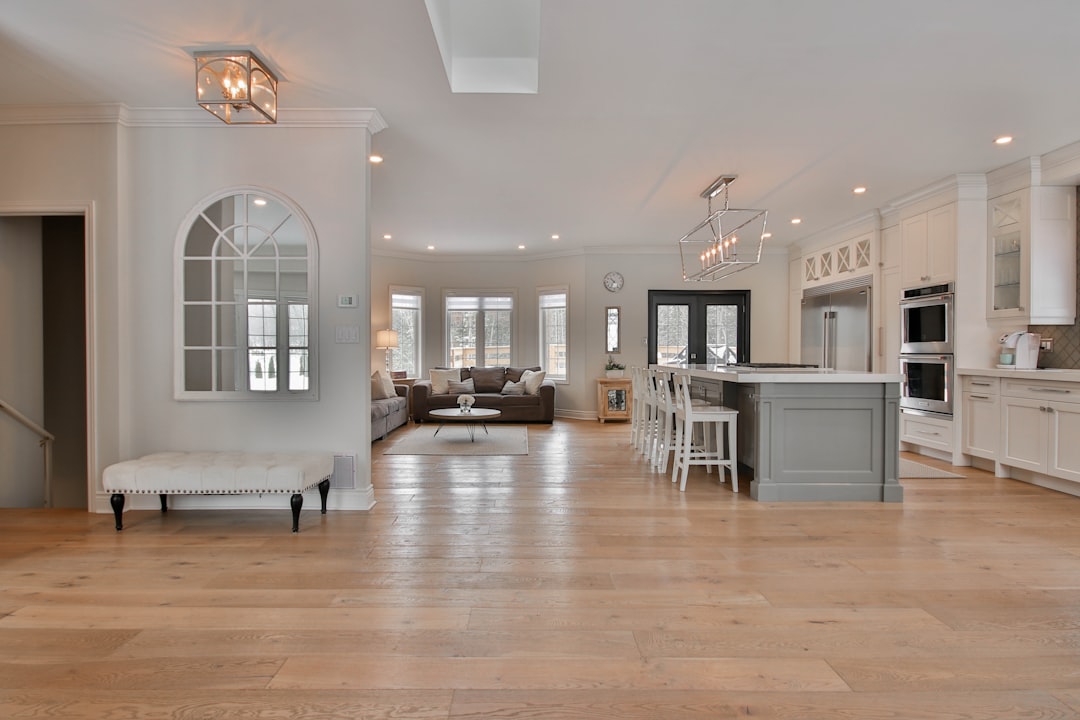
- Unobstructed Water Views: Ocean, large lakes, and wide rivers command the highest premiums. The combination of tranquility, recreation, and scarcity makes these the most sought-after.
- Mountain Views: Sweeping views of a mountain range are highly valued for their grandeur and natural beauty.
- City Skylines: A sparkling cityscape view, especially at night, is a valuable feature in urban and suburban markets.
- Park, Golf Course, or Open Space Views: Overlooking serene, green landscapes also adds value, though typically less than water or mountains.
It’s also crucial to distinguish between a full panoramic view and a partial or “peek-a-boo” view. The latter, where the view is only visible from a specific angle or is partially obstructed, adds a much smaller premium.
The Permanence Factor: Is Your View Protected?
Perhaps the most critical question when valuing a view is: could it disappear? A buyer is paying a premium for the experience of that view, and its long-term security is paramount. A protected view is one that is unlikely to ever be obstructed.
Examples of protected views include those overlooking:
- A large body of water like an ocean or one of the Great Lakes.
- A national or state park.
- Land with permanent conservation easements or deed restrictions that prevent future development.
A view that overlooks a vacant, privately-owned lot is far less valuable because of the risk that a new structure could be built, completely eliminating the view and the premium paid for it. An expert analysis always investigates the surrounding parcels to determine the long-term security of a view.
Custom Builds: A Double-Edged Sword of Value
Custom builds and high-end finishes can significantly boost a home’s worth, but only if they appeal to a broad market and don’t represent an over-improvement for the neighborhood. The return on investment (ROI) for custom work is directly tied to its quality, functionality, and alignment with what today’s buyers are seeking.
High-ROI vs. Low-ROI Customizations
Some custom features are consistently rewarded by the market, while others are seen as overly personal and may not recoup their cost. Understanding this distinction is key to smart renovations and accurate pricing.
| Feature Type | High-ROI Examples | Low-ROI Examples |
|---|---|---|
| Kitchens & Baths | Chef’s kitchens with professional-grade appliances, quartz or stone countertops, and timeless cabinetry. Spa-like primary bathrooms with large walk-in showers and double vanities. | Highly personalized tile choices, unconventional layouts, or jetted tubs (which are falling out of favor). |
| Living Spaces | High-quality hardwood flooring, functional built-ins for storage, and open-concept floor plans. | Bold, eccentric paint colors, wall-to-wall carpeting in main living areas, or overly specific rooms like a soundproofed recording studio. |
| Outdoor Areas | Functional outdoor living spaces like covered patios with outdoor kitchens, professional landscaping, and fire pits. | Swimming pools in climates with short summers (high maintenance, limited use), or elaborate water features. |
| Structural | Converting an attic or basement into usable living space (adding square footage). | Converting a garage into living space (removes valuable parking/storage). |
According to Remodeling magazine’s 2023 Cost vs. Value Report, projects like a minor kitchen remodel can recoup over 85% of their cost, while a primary suite addition may only recoup around 50%. This data underscores the importance of choosing upgrades that have broad appeal.
The Danger of Over-Improving
Over-improving is a term used to describe a situation where a home’s level of finish and features far exceeds the standard of the surrounding neighborhood. For example, building a $1.5 million home in a neighborhood where the average home value is $500,000. While the house itself may be intrinsically worth $1.5 million from a construction-cost perspective, its market value will be constrained by the lower-priced homes around it. Appraisers and buyers are reluctant to pay a price that is a significant outlier for the area. The principle of conformity dictates that a home achieves its maximum value when it is in a neighborhood of similar-quality homes.
The Art and Science of an Accurate Valuation
The key to accurately valuing a unique property lies in combining data analysis with deep local market expertise. This is where the “art” of real estate valuation complements the “science” of data, and it’s how realestateinkeswick.com provides its unique value to clients by looking beyond the raw numbers.
Why Local Knowledge is Irreplaceable
A local expert understands the specific buyer pool in a way no algorithm can. Who is the target demographic for a home with acreage in the Keswick area? Are they equestrians, hobby farmers, or families seeking privacy? What specific premium are buyers in this market willing to pay for a protected view of Lake Simcoe versus a golf course view?
Local agents have access to a deep well of data and anecdotal evidence from past sales that AVMs miss. They know about the property that sold off-market for a record price because of its rare waterfront access, or the one that sat for months because its custom features were too niche. This nuanced understanding allows for more accurate adjustments when creating a valuation. Developing a successful strategy for homes with acreage or other unique features requires this kind of granular insight.
Crafting the Narrative of Your Home
A great real estate professional doesn’t just list features; they tell the story of the property. They articulate why the custom chef’s kitchen is superior for entertaining, how the five acres of rolling hills provide unparalleled privacy and a connection to nature, and what it truly feels like to watch the sunset from the west-facing deck every evening.
This narrative is essential to helping potential buyers understand and emotionally connect with the value of features they can’t find anywhere else. It transforms a list of amenities into a vision of a lifestyle. This storytelling, backed by hard data and expert analysis, is what ultimately helps a unique property achieve its maximum value in the market. Exploring the full range of our posts and pages can offer further insight into how we approach each property’s unique story.
Your Home is More Than Just Numbers
Valuing a home rich with acreage, spectacular views, and custom craftsmanship requires moving beyond simple formulas and automated tools. It involves a sophisticated understanding of land use, view permanence, market tastes, and local buyer demand. Relying on an instant online estimate or a non-specialist for your valuation can mean leaving a significant amount of money on the table.
Your unique home is the result of careful investment, planning, and passion. It deserves a valuation process that honors and accurately reflects those “priceless” qualities. If you’re ready to understand the true worth of your property, it’s time to partner with an expert who sees beyond the numbers and understands the art of the possible.